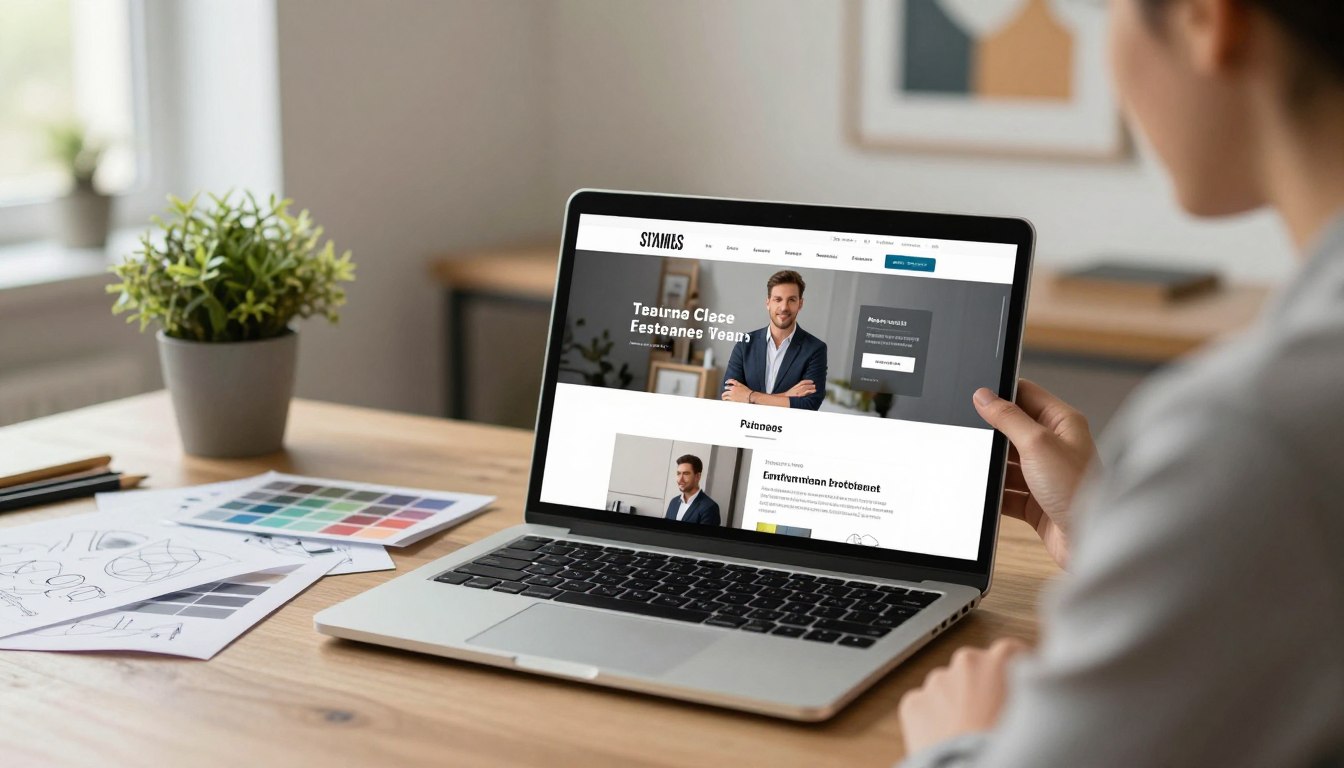
Does your digital footprint truly represent your unique talent and hard work? We often find ourselves lost in a sea of endless resumes. However, a personal portfolio website offers a rare chance to break free from the crowd. Our goal is to help you build a digital space that feels both authentic and professional.
Imagine a platform where every pixel tells your unique story to the world. We will guide you through the journey of using creative portfolio design to make a lasting impression. This process allows us to highlight our best achievements with style and grace. We believe that your online image should be as vibrant as your actual career.

It is time to showcase your work online with total confidence and flair. By focusing on a clean layout, we can ensure your personal brand stays memorable for years. Let us explore how to transform your presence into a powerful magnet for new opportunities. We want to provide you with the essential tools to shine brightly in a very competitive market today.
Key Takeaways
- Highlight your professional accomplishments with a clear, visual layout.
- Ensure your personal brand reflects your unique skills and personality.
- Use a clean design to make a strong first impression on recruiters.
- Organize your best projects to demonstrate your growth and expertise.
- Maintain a professional online presence to attract new career opportunities.
- Choose a platform that allows for easy updates and creative flexibility.
Defining Your Brand Identity and Goals
Defining your brand identity and goals is the foundation upon which a successful online portfolio is built. When you build your portfolio online, you’re not just showcasing your work; you’re creating a digital representation of your professional self. This process involves several key steps that help you stand out and effectively communicate your value to your audience.

Identifying Your Target Audience
Understanding who your target audience is, is crucial for tailoring your content and design to meet their expectations. Your audience could be potential employers, clients, or collaborators. Identifying their needs and preferences allows you to curate your portfolio in a way that resonates with them.
To identify your target audience, consider factors such as their industry, job roles, and what they value in a professional portfolio site. This insight will guide your decisions on content, layout, and even the portfolio website builder you choose.
Establishing Your Unique Value Proposition
Your unique value proposition (UVP) is what sets you apart from others in your field. It’s a statement that clearly communicates your strengths and the unique benefits you offer. Establishing a strong UVP is essential for making your professional portfolio site memorable and impactful.
To craft your UVP, reflect on your skills, experiences, and achievements. Consider what makes your approach unique and how you can convey this through your portfolio. Your UVP should be evident throughout your site, from the homepage to the about page.
Selecting a Consistent Visual Style
A consistent visual style reinforces your brand identity across your professional portfolio site. This includes choosing a cohesive color scheme, typography, and imagery that reflect your professional brand. Consistency in visual elements helps to create a professional and polished appearance.
When selecting a visual style, consider how it will be perceived by your target audience. Ensure that your choices are not only aesthetically pleasing but also align with your brand’s message and values. A well-chosen visual style can significantly enhance the effectiveness of your online portfolio.
Choosing the Right Platform for Your Personal Portfolio Website
The foundation of a strong online portfolio lies in choosing the right platform to showcase your work. With so many options available, it’s essential to evaluate your needs and goals before making a decision.
When it comes to building your personal portfolio website, you have several choices. You can either use a website builder, opt for custom development, or utilize a Content Management System (CMS). Each option has its pros and cons, which we’ll explore in detail.
Evaluating Website Builders vs. Custom Development
Website builders like Wix, Weebly, and Squarespace offer a user-friendly interface and drag-and-drop tools, making it easy to create a website without needing to know how to code. On the other hand, custom development provides complete control over the design and functionality but requires significant technical expertise and resources.
Key considerations when evaluating website builders vs. custom development include:
- Ease of use and maintenance
- Customization options
- Scalability and flexibility
- Cost and resource implications

Pros and Cons of Popular Platforms like Squarespace and WordPress
Squarespace and WordPress are two of the most popular platforms for building a personal portfolio website. Squarespace is known for its sleek templates and user-friendly interface, while WordPress offers a high degree of customization and flexibility.
Squarespace Pros: Easy to use, beautiful templates, and reliable customer support.
Squarespace Cons: Limited customization options compared to WordPress, and less flexible for complex projects.
WordPress Pros: Highly customizable, extensive community support, and scalable.
WordPress Cons: Steeper learning curve, requires more maintenance, and can be costly for premium themes and plugins.
Assessing Scalability and Maintenance Needs
When choosing a platform for your personal portfolio website, it’s crucial to consider your scalability and maintenance needs. If you anticipate frequent updates or plan to expand your online presence, you’ll want a platform that can grow with you.
Factors to consider for scalability and maintenance:
| Factor | Description |
|---|---|
| Content Management | Ease of updating and managing content |
| Performance | How well the platform handles increased traffic |
| Customization | Ability to add new features and functionalities |
By carefully evaluating these factors and considering your long-term goals, you can choose a platform that meets your needs and supports your online portfolio’s growth.
Curating Your Best Work to Showcase Your Skills Online
To effectively demonstrate your expertise, curating a portfolio that highlights your best work is essential. This process involves more than just gathering a collection of projects; it’s about showcasing your skills and accomplishments in a way that resonates with your target audience.
Selecting Projects That Align with Career Goals
When selecting projects for your portfolio, it’s crucial to choose those that align with your career goals. This ensures that your portfolio is focused and effectively communicates your value to potential employers or clients. Consider the following criteria when selecting projects:
- Relevance: Ensure the project is relevant to your desired career path or industry.
- Impact: Choose projects that demonstrate significant impact or results.
- Skill demonstration: Select projects that showcase a range of skills relevant to your profession.
By carefully selecting projects that meet these criteria, you can create a strong narrative about your professional capabilities.
Writing Compelling Case Studies
Case studies are a powerful tool for demonstrating your expertise and the value you can bring to clients or employers. When writing case studies, focus on telling a story that highlights your role in the project, the challenges you faced, and the outcomes you achieved. Key elements to include are:
- Context: Provide background information on the project.
- Challenge: Describe the challenges you faced and how you addressed them.
- Solution: Outline the solutions you implemented and your role in their development.
- Results: Share the outcomes of your work, including any metrics or feedback that demonstrate success.
By structuring your case studies in this way, you can effectively communicate your skills and experience to your audience.
Balancing Quality Over Quantity
When it comes to showcasing your work, it’s often tempting to include as many projects as possible. However, quality should always trump quantity. Including too many projects can dilute the impact of your portfolio and make it harder for viewers to appreciate your best work.
Instead, focus on a curated selection of your strongest projects. This approach not only makes your portfolio more manageable for viewers but also demonstrates your ability to prioritize and focus on high-quality outcomes.

By balancing quality over quantity and carefully curating your portfolio, you can create a compelling online presence that effectively showcases your skills and attracts new opportunities.
Designing a User-Friendly Layout for Your Creative Portfolio Design
In the digital age, a visually appealing and user-friendly personal portfolio website is essential for creatives. A well-designed layout not only showcases your work but also provides a seamless user experience, encouraging visitors to explore your portfolio further.
To achieve this, we need to focus on several key elements that contribute to a user-friendly layout. A well-structured navigation system is crucial for helping visitors find the information they need quickly and efficiently.
Prioritizing Intuitive Navigation
Intuitive navigation is vital for ensuring that your website is easy to use. This involves organizing your content in a logical manner and making sure that your menu is clear and concise. By doing so, you can help visitors navigate your site with ease, improving their overall experience.
To prioritize intuitive navigation, consider the following:
- Simplify your menu by limiting the number of options.
- Use clear and descriptive labels for your menu items.
- Ensure that your navigation is consistent across all pages.
Implementing Responsive Design for Mobile Users
With the majority of internet users accessing websites through mobile devices, implementing a responsive design is no longer optional. A responsive design ensures that your website adapts to different screen sizes, providing an optimal viewing experience for all users.

To implement responsive design effectively, consider the following strategies:
- Use flexible grids and layouts that adapt to different screen sizes.
- Optimize your images to ensure they load quickly on mobile devices.
- Test your website on various devices to ensure compatibility.
Utilizing White Space for Visual Clarity
White space, also known as negative space, plays a crucial role in enhancing the visual clarity of your website. By effectively utilizing white space, you can create a clean and uncluttered design that draws attention to your work.
To utilize white space effectively, consider the following tips:
- Balance text and images with sufficient white space.
- Avoid overcrowding your pages with too much content.
- Use white space to create a clear visual hierarchy.
By prioritizing intuitive navigation, implementing responsive design, and utilizing white space, you can create a user-friendly layout for your creative portfolio design that showcases your work in the best possible light.
Crafting an Engaging About Me Page
As we build your portfolio online, the About Me page stands out as a vital component that humanizes your professional brand. This page is where you can share your story, highlighting your journey, expertise, and what makes you unique.

Humanizing Your Professional Brand
To humanize your professional brand, you need to go beyond listing your skills and qualifications. Share your passions, interests, and what drives you. This helps potential clients or employers connect with you on a personal level.
For instance, you can include a brief story about how you became interested in your field or a challenge you overcame. This narrative approach makes your profile more relatable and engaging.
Highlighting Your Journey and Expertise
Your About Me page is the perfect place to showcase your professional journey and highlight your areas of expertise. This can be done by:
- Mentioning significant milestones in your career
- Discussing your key skills and how they’ve been applied in various projects
- Including any relevant certifications or education
By doing so, you establish credibility and demonstrate your value to potential clients or employers.
Adding a Personal Touch to Build Trust
Adding a personal touch to your About Me page can significantly enhance trust with your audience. Consider including:
| Personal Touch | Description | Benefit |
|---|---|---|
| A photo of yourself | A professional yet personal photo | Creates a personal connection |
| Personal anecdotes | Stories about your professional journey | Makes your profile more relatable |
| Contact information | Clear and accessible contact details | Facilitates communication |
By incorporating these elements, you can create an About Me page that not only showcases your professional capabilities but also builds a connection with your audience, making your professional portfolio site more effective.
Optimizing Your Portfolio for Search Engines
To showcase your work online effectively, your personal portfolio website needs to be search engine friendly. This involves a series of steps that not only improve your website’s visibility but also drive organic traffic to your site.
Optimizing your portfolio for search engines is crucial in today’s digital age. With the majority of online experiences beginning with a search engine, ensuring that your portfolio appears in relevant search results can significantly enhance your online presence.
Conducting Keyword Research for Your Niche
Conducting thorough keyword research is the foundation of any successful SEO strategy. It helps you understand what potential clients or employers are searching for in your niche.
- Identify relevant keywords and phrases that align with your skills and services.
- Use tools like Google Keyword Planner or SEMrush to find the best keywords.
- Analyze your competitors to see what keywords they are ranking for.
By incorporating these keywords naturally into your portfolio content, you can improve your chances of ranking higher in search engine results.
Optimizing Image Alt Text and File Names
Images are a crucial part of a portfolio, but they can also impact your SEO if not optimized properly.
Optimizing image alt text and file names involves using descriptive text that includes your target keywords. This not only helps search engines understand the content of your images but also improves accessibility for visually impaired users.
- Use descriptive file names that include target keywords (e.g., “portfolio-web-design-example.jpg”).
- Write alt text that accurately describes the image and includes relevant keywords.
Structuring Meta Descriptions and Page Titles
Meta descriptions and page titles are critical elements that influence how your portfolio pages are displayed in search engine results.
A well-crafted meta description should entice users to click through to your site, while also including relevant keywords. Similarly, page titles should be descriptive, concise, and include target keywords.
“The title tag is the most important on-page SEO element you have.” –
To optimize these elements effectively:
- Keep meta descriptions under 160 characters.
- Ensure page titles are descriptive and under 60 characters.
- Include target keywords in both meta descriptions and page titles.
Integrating Essential Features for a Professional Portfolio Site
A well-crafted online portfolio platform is not just about showcasing your work; it’s also about integrating key features that make it functional and user-friendly. When we integrate essential features into our professional portfolio site, we enhance its overall functionality and user experience.
Setting Up a Clear Contact Form
A clear and concise contact form is vital for any professional portfolio site. It allows potential clients or employers to get in touch with us easily. When setting up a contact form, we should ensure it is simple, secure, and user-friendly.
- A simple and straightforward layout
- Clear labels for each field
- A CAPTCHA to prevent spam
- Integration with our email to receive notifications
Showcasing Social Proof and Testimonials
Showcasing social proof and testimonials on our portfolio site helps build credibility and trust with potential clients. We can achieve this by displaying client testimonials prominently, including any relevant certifications or awards, and highlighting successful projects and case studies.
Using social proof elements like “Client of the Month” or “Project of the Year” can also be effective.
Adding Downloadable Resume Links
Adding a downloadable resume link makes it easy for potential employers to access our detailed resume. We should ensure that our resume is up-to-date, tailored to our target job market, and saved in a commonly used format like PDF.
Leveraging Portfolio Website Templates Effectively
Using portfolio website templates can significantly streamline the process of creating a professional online portfolio. These templates provide a solid foundation, allowing you to focus on showcasing your work and skills without getting bogged down in design details.
Customizing Templates to Avoid Generic Looks
While portfolio website templates offer a convenient starting point, it’s crucial to customize them to reflect your brand identity. “A generic-looking website can fail to capture the essence of your professional brand,” says a leading web design expert. To avoid this, personalize the template by adjusting the color scheme, typography, and layout to align with your unique style.
Customization also involves tailoring the content to highlight your strengths and accomplishments. By doing so, you can create a distinctive online presence that sets you apart from others in your field.
Ensuring Brand Consistency Across Pages
Maintaining brand consistency across all pages of your portfolio website is vital for reinforcing your professional identity. Ensure that your logo, color palette, and typography are consistent throughout the site. This cohesion helps to build trust and recognition with your audience.
To achieve this, establish a style guide that outlines the core elements of your brand. This guide will serve as a reference point for maintaining consistency as you customize your template.
Testing Template Performance and Speed
The performance and speed of your portfolio website are critical factors in user experience. A slow-loading site can deter visitors and negatively impact your search engine rankings. Therefore, it’s essential to test the performance of your chosen template.
Use tools like Google PageSpeed Insights to evaluate your site’s loading speed and identify areas for improvement. Optimizing images, leveraging browser caching, and minimizing code can help enhance your site’s performance.
Advanced Techniques to Build Your Portfolio Online
Elevating your online portfolio to the next level involves leveraging advanced techniques that capture the essence of your professional brand. To showcase your skills online effectively, it’s crucial to incorporate elements that not only highlight your work but also engage your audience.
One of the key strategies is to enhance user experience through interactive elements. This can include animations, scrolling effects, and other dynamic features that make your portfolio more engaging.
Incorporating Interactive Elements and Animations
Interactive elements and animations can significantly enhance the user experience of your portfolio. By incorporating these features, you can create a more immersive experience that captivates your audience.
- Use animations to draw attention to key projects or achievements.
- Incorporate interactive elements like hover effects or scrolling animations to engage users.
- Ensure that these elements do not overshadow your work but rather complement it.
Setting Up a Blog to Demonstrate Thought Leadership
Establishing a blog on your portfolio site is an effective way to demonstrate your thought leadership and expertise in your field. By sharing your insights and knowledge, you can attract potential clients and establish your authority.
Some benefits of having a blog include:
- Showcasing your expertise and thought leadership.
- Improving your site’s SEO through fresh and relevant content.
- Providing value to your audience through insightful articles.
Integrating Third-Party Tools and Analytics
To understand your audience better and make data-driven decisions, integrating third-party tools and analytics is essential. This can help you track user behavior, monitor site performance, and identify areas for improvement.
Consider integrating tools like Google Analytics to gain insights into your site’s traffic and user engagement. This data can be invaluable in refining your strategy to build your portfolio online effectively.
Ensuring Accessibility and Inclusivity
In today’s digital age, making your personal portfolio website inclusive is not just a nicety, but a necessity. As we strive to showcase our work and skills online, it’s crucial that our creative portfolio design is accessible to everyone, including those with disabilities.
Ensuring accessibility and inclusivity involves several key steps. First, we need to adhere to established guidelines that help make our website usable by as many people as possible.
Following Web Content Accessibility Guidelines
The Web Content Accessibility Guidelines (WCAG) provide a comprehensive framework for making web content more accessible. By following these guidelines, we can ensure that our personal portfolio website is perceivable, operable, understandable, and robust for all users.
- Use clear and consistent navigation
- Provide alternative text for images
- Ensure that all interactive elements can be accessed using a keyboard
Choosing Readable Typography and Color Contrast
The choice of typography and color scheme plays a significant role in the accessibility of our creative portfolio design. We should opt for typography that is clear and readable, avoiding fonts that are overly decorative or difficult to read.
Moreover, ensuring sufficient color contrast between the background and text is crucial for users with visual impairments. Tools are available to check the contrast ratio and ensure it meets the WCAG recommendations.
Testing for Screen Reader Compatibility
Screen readers are essential tools for visually impaired users, allowing them to navigate and understand web content. To ensure our personal portfolio website is compatible with screen readers, we need to test it using various screen reader software.
This involves checking that all content is correctly read out, including text, links, and image alt text, and that the navigation is logical and straightforward.
Maintaining and Updating Your Online Portfolio Platform
To keep your professional portfolio site impactful, regular maintenance is essential. An online portfolio platform is not a static entity; it requires continuous updates to reflect your growing skills and experience.
We understand that maintaining a professional online presence can be daunting, but with a structured approach, it can be manageable and highly beneficial. Here are key strategies to ensure your online portfolio remains effective and engaging.
Establishing a Routine for Content Refreshing
Regularly updating your portfolio with fresh content is vital. This could mean adding new projects, rewriting case studies, or even removing outdated work that no longer represents your current capabilities. Consistency is key to keeping your audience engaged and interested in your professional journey.
To implement a content refreshing routine, consider the following schedule:
| Frequency | Action |
|---|---|
| Monthly | Review and update project descriptions and case studies. |
| Quarterly | Add new projects or achievements to your portfolio. |
| Bi-Annually | Conduct a thorough review of your entire portfolio to ensure it aligns with your current career goals. |
Monitoring Site Performance and Broken Links
Ensuring your site is technically sound is as important as the content it hosts. Regularly check for broken links and monitor your site’s performance to provide a smooth user experience.
Utilize tools like Google Search Console to identify and fix broken links, and use analytics to understand your site’s performance. This proactive approach helps in maintaining a professional and reliable online presence.
Gathering Feedback from Peers and Clients
Feedback is invaluable for growth. Reach out to peers and clients to gain insights into how your portfolio is perceived and where it can be improved. This not only helps in making targeted improvements but also demonstrates your openness to growth and criticism.
By incorporating these strategies into your maintenance routine, you can ensure your professional portfolio site remains a powerful tool for advancing your career.
Promoting Your Portfolio to Attract Opportunities
Attracting opportunities requires more than just building a portfolio; it demands a strategic promotion plan. Once you have a well-crafted portfolio site, it’s essential to make it visible to potential clients and employers.
To effectively promote your portfolio, consider leveraging various channels and strategies. We will explore three key methods: sharing your work on social media, networking through professional communities, and utilizing your portfolio in email outreach efforts.
Sharing Your Work on Social Media Channels
Social media platforms are powerful tools for showcasing your work online. By sharing your projects and case studies on platforms like LinkedIn, Instagram, and Twitter, you can increase your visibility and reach a broader audience.
Key Strategies for Social Media Promotion:
- Post high-quality visuals of your work.
- Engage with your audience by responding to comments and messages.
- Utilize relevant hashtags to increase discoverability.
Networking Through Professional Communities
Networking is a crucial aspect of promoting your portfolio. Joining professional communities and attending industry events can help you connect with potential clients and collaborators.
Benefits of Professional Networking:
| Benefit | Description |
|---|---|
| Access to Opportunities | Connect with potential clients and employers. |
| Knowledge Sharing | Learn from industry experts and share your insights. |
| Collaboration | Find potential collaborators for future projects. |
Using Your Portfolio in Email Outreach
Incorporating your portfolio into email outreach can make your messages more impactful. By sharing specific projects or case studies, you can demonstrate your capabilities and build credibility with potential clients.
Tips for Effective Email Outreach:
- Personalize your emails by addressing the recipient by name.
- Clearly state the purpose of your email and how your portfolio relates to it.
- Include a clear call-to-action, such as scheduling a meeting or call.
Conclusion
Creating a captivating personal portfolio website is a crucial step in establishing a strong online presence. By defining your brand identity, choosing the right platform, and curating your best work, you can create a professional portfolio site that showcases your skills and attracts opportunities.
We have explored the essential elements of a successful personal portfolio website, from designing a user-friendly layout to optimizing for search engines. Regular maintenance and promotion of your portfolio are also vital to furthering your career and staying competitive in your field.
By following the guidelines outlined in this article, you can develop a professional portfolio site that effectively communicates your value and helps you achieve your career goals. A well-crafted personal portfolio website is an invaluable tool for anyone looking to establish a strong online presence and attract new opportunities.
FAQ
Why should we invest the effort to create a personal portfolio website?
We believe a personal portfolio website is the single most effective way to showcase your work online and establish a unique brand identity. Unlike a standard resume, a professional portfolio site allows us to tell a story, provide context through case studies, and showcase your skills online in a dynamic, visually engaging environment that captures the attention of recruiters and clients alike.
How do we choose the best portfolio website builder for our specific needs?
Choosing the right portfolio website builder involves balancing ease of use with creative flexibility. We recommend evaluating your technical skills and maintenance preferences; for instance, Squarespace is fantastic for those who want beautiful, ready-to-go portfolio website templates, while WordPress offers deep customization for those who want a more bespoke online portfolio platform. Our goal is always to find a tool that scales with our career growth.
What are the essential elements of an effective creative portfolio design?
A successful creative portfolio design must prioritize the user experience. We focus on implementing intuitive navigation so visitors can find our work quickly, using white space to prevent visual clutter, and ensuring the site is fully responsive for mobile users. By keeping the layout clean and professional, we ensure that our projects remain the primary focus of the visitor’s attention.
How can we ensure our site is found by the right people?
To attract the right opportunities, we must optimize our site for search engines. This includes conducting niche-specific keyword research and strategically placing those terms in our meta descriptions and page titles. We also make sure to optimize image alt text and file names, which helps our professional portfolio site rank higher in search results and drive more organic traffic to our work.
How do we build our portfolio online to stand out from the competition?
When we build your portfolio online, we recommend going beyond just a gallery of images. We suggest writing compelling case studies that explain our problem-solving process and including social proof like testimonials from real clients or colleagues. Adding interactive elements or a blog to demonstrate thought leadership can further differentiate our brand and show that we are active experts in our field.
What is the best way to maintain and promote our online portfolio platform?
We view a portfolio as a living document, not a “set it and forget it” project. We establish a routine for refreshing content with our latest projects and regularly check for broken links or performance issues. To promote our work, we share updates across social media channels and use our personal portfolio website link in email signatures and professional networking outreach to ensure we stay top-of-mind for new opportunities.