Six years ago, Google was confident that by 2030 it would power all operations with electricity produced from clean sources, including wind and solar power, and remove as much pollution as it produced. Today it calls those goals “moonshots.” Microsoft says it still aims to remove more carbon than it does by 2030 but now describes the effort as “a marathon, not a sprint.”
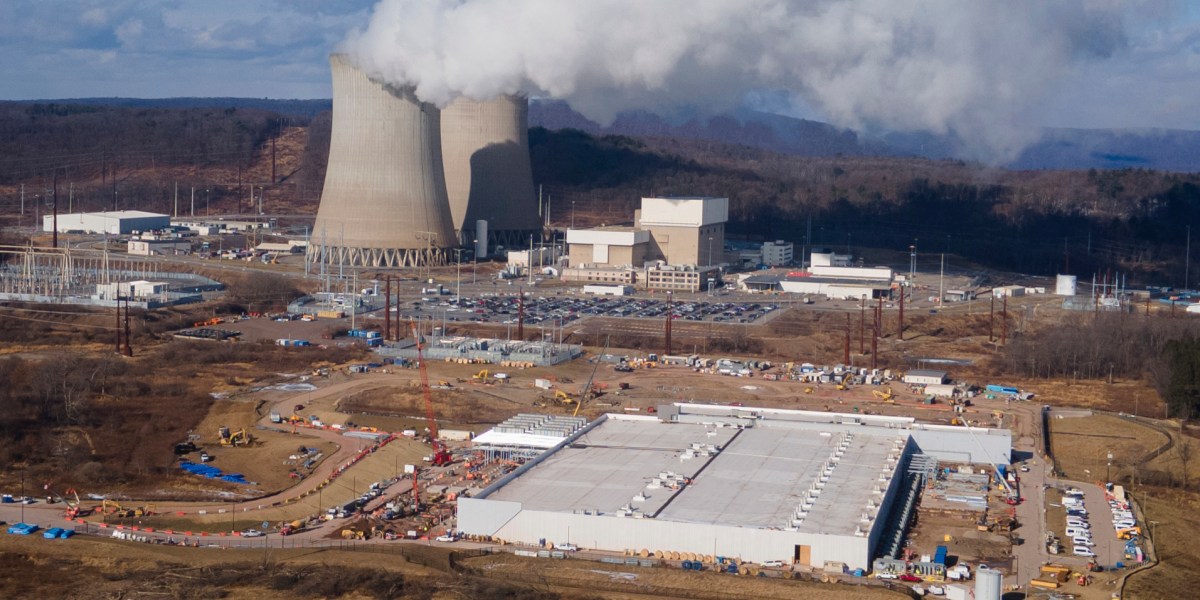
The race to harness artificial intelligence is complicating tech companies’ commitment to reducing greenhouse gas emissions, many of which come from burning natural gas, oil and coal and drive climate change. They say they have to be flexible as they rush to build more data centers that can consume more energy than entire cities.
“Even though they haven’t officially updated their target, they’re starting to believe, ‘Yeah, maybe we’re not on track,'” said Patrick Huang, senior analyst at Wood Mackenzie.
Now, Huang said, companies must use any form of energy to stay competitive — and increasingly it’s natural gas, which is mostly methane, a greenhouse gas.
Tech companies have made record purchases of clean energy in 2024 and 2025, according to the Clean Energy Consumers Association.
But total emissions rose in the first five years of their climate commitment, according to the companies’ performance reports. Google traffic has increased by almost 50%. Amazon is up 33%, Microsoft is up 23% and Meta is up 60%.
Data centers will use about 4.6% of total US electricity by 2024, a share that will almost double by 2028, according to government estimates. Some analysts predict that electricity consumption nationwide will rise by as much as 20% in the next ten years, and data centers are a big reason.
Meanwhile, the backlog of proposed projects awaiting approval to connect to the energy grid and the Trump administration’s efforts to marginalize renewable energy could affect the climate goals of technology companies — and prolong dependence on fossil fuels, experts said.
“Each of these could be real challenges,” said Julie McNamara, director of joint policy at the Union of Concerned Scientists’ Climate & Energy program. “Together, it just creates near-term tension in the system.”
Natural gas consumption spikes as AI increases
Technology companies say they have made significant progress on emissions through energy efficiency measures, purchasing renewable energy credits and energy from sources that do not emit greenhouse gases and requiring suppliers to reduce their emissions.
Yet natural gas in 2024 accounted for more than 40% of US data centers, while coal provided 30% worldwide, the International Energy Agency said. And this process doesn’t seem to be slow. Utilities are planning natural gas plants around the country to help power data centers, while other technology companies are planning natural gas plants in built-up areas just to power data centers.
“It’s a rush and a lot of competition for resources,” said Lori Bird, director of the US Energy Program at the World Resources Institute.
Microsoft President Brad Smith told The Associated Press that he is “confident in our ability” to meet the company’s 2030 goal of removing more carbon dioxide from the atmosphere than it emits by investing in new carbon-free energy sources, including nuclear, solar and hydropower.
For example, in Wisconsin, two new natural gas plants to help power Microsoft’s data center will be offset by investments in solar in other parts of the state. Similarly, three natural gas plants will power Meta’s large data center in rural Louisiana, while the company is investing in solar elsewhere.
Google says it is investing in wind, hydropower, battery storage and advanced nuclear, though it also relies on natural gas. The company plans to buy electricity from a natural gas plant to be built at the Archer Daniels Midland corn plant in Decatur, Illinois, where carbon dioxide emissions would be captured and stored underground.
To help meet clean energy goals, technology companies rely on such energy purchase agreements and purchase renewable energy certificates, tradable assets that support new and existing sources. But that could become more difficult under proposed changes to how greenhouse gas emissions are reported, which would require sources to be co-located with the company’s data center and operating hours — for example, solar charges can only be used during daytime operating hours.
Although some new gas plants will replace waste coal plants, it takes about 30 years to recover the investment. That means delaying the overall transition to clean and renewable energy at a time when the United Nations Environment Program warns that high-emitting countries will not meet their goals to reduce greenhouse gas emissions. AI is partly to blame for the 2.4% increase in US oil production last year, according to a study by the Rhodium Group, an independent research firm.
And while other parts of the economy are also contributing, “it’s only because of these data centers that these gas plants are being built,” McNamara said. “There’s no two ways about it.”
Trump’s war on renewables complicates technology goals
Finding enough electricity was difficult even before President Donald Trump took office last year and took on a renewable energy goal.
He canceled subsidies and permits for solar and wind projects and tax breaks for renewable energy, which advocates say can be built cheaper and faster than natural gas or nuclear plants, while ordering many coal plants slated for retirement to continue operating.
Many companies have set goals in the hope that federal tax credits will support wind and solar deployments, said Rich Powell, executive director of the Clean Energy Consumers Association.
But those loans will expire in July, after being repealed by the Republican-controlled Congress and Trump.
Trump, who has called climate change a “hype,” has argued that green energy is unreliable and expensive and could undermine the nation’s energy independence.
Powell said his organization “has been very clear with this Congress and this administration that all technology needs to be level playing field and that we are putting energy availability and energy reliability at risk if we don’t.”
Josh Parker, chief operating officer of chipmaker Nvidia, said that AI will eventually reduce power consumption because it is more efficient than a traditional computer. He said slowing the development of the force could cause the US to fall behind in AI.
“Our view is that we need a top-down approach to energy,” he said.
Technology companies would have been hard-pressed in 2020, when many set targets, to produce current energy requirements because much of the latest technology and tools used to train machine learning models – which use a lot of data power – had just been introduced, said Jay Dietrich, who conducts AI research for the Uptime Institute and who led the emission target setting at IBM.
By 2023, he said, tech companies “had a pretty good idea that things were going to be even better … and that the numbers were going to grow faster.”
He expects many to increase the timeline of gas goals, based on a 2025 Uptime Institute study that saw a 12% decrease in the number of operators who say they will meet the market’s 2030 goal of net neutrality. However, even with increasing emissions, the largest companies should be able to pay for sufficient renewable energy and offsets to achieve carbon-neutral goals.
McNamara says the increased demand for electricity in data centers has turned the challenge into a “manifest problem.”
He said: “The technology companies are clearly or implicitly allowing a significant increase in dependence on fossil fuels as a result of their actions.”
___
Associated Press writer Matt O’Brien contributed to this report.
___
The Associated Press’s climate and environmental coverage receives financial support from several private organizations. AP is solely responsible for all content. Find AP’s criteria for working with donors, a list of sponsors and paid security sites at AP.org.
#Big #tech #embracing #clean #energy #tackling #climate #change #data #centers #arrived #Good #luck